




Head Content Writer
Director
Paying off a mortgage over 25 or 30 years can feel like a very long road. The good news is that most mortgages let you pay a little extra, and even small overpayments can make a real difference. You could save thousands of pounds in interest and become mortgage-free sooner.
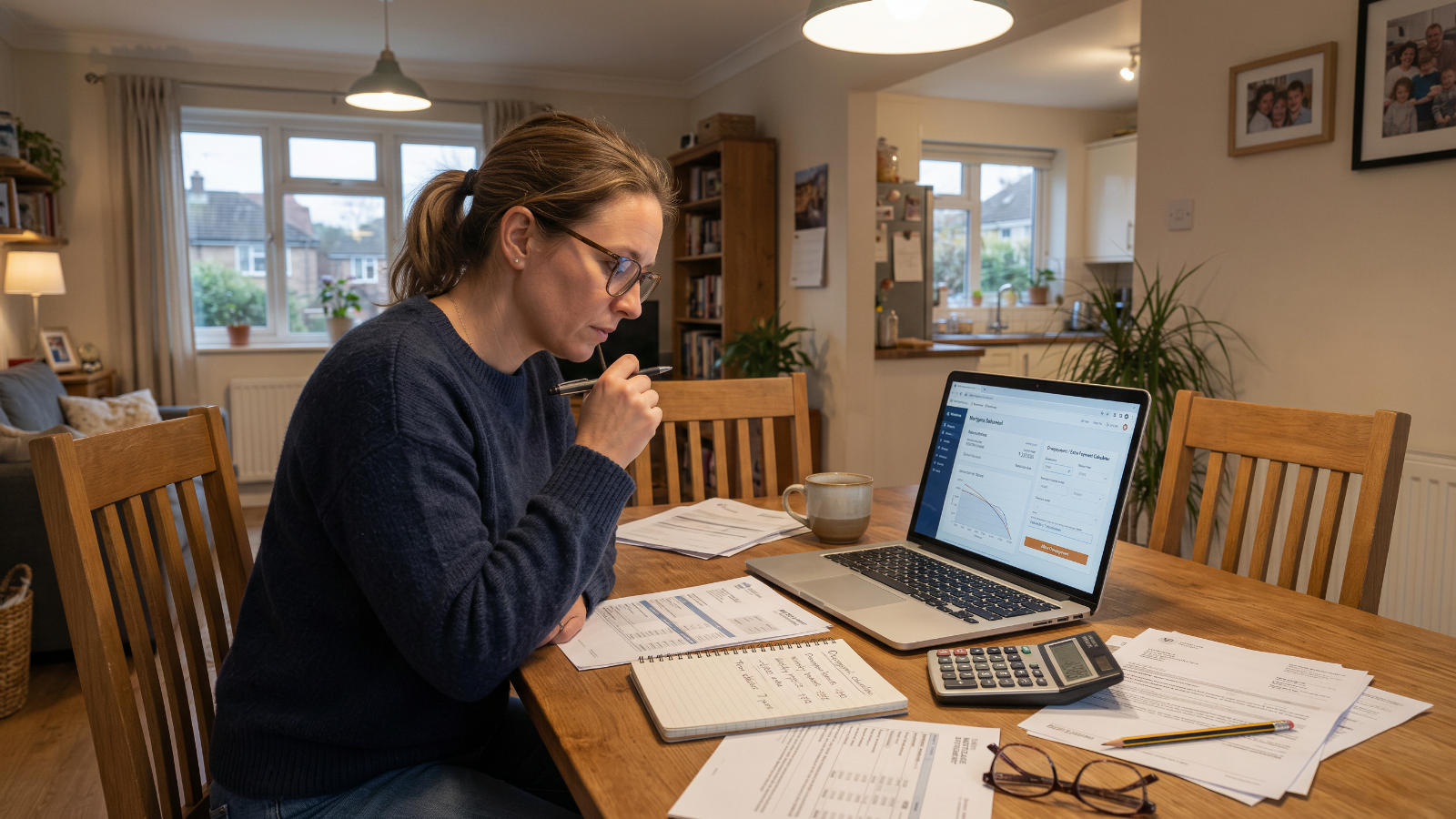
Our calculator shows you how much you could save by overpaying, whether that's a one-off lump sum, regular extra payments, or both.
What is a mortgage overpayment?
A mortgage overpayment is any amount you pay on top of your normal monthly payment. The extra money goes straight towards paying off the amount you borrowed, rather than the interest.
Because mortgage interest is worked out on the amount you still owe, reducing your balance means you'll pay less interest from then on. Over time, this can really add up.
An example
Let's say you have a £200,000 repayment mortgage over 25 years, at an illustrative interest rate of 5.5%. If you overpaid by £100 every month:
- You could save around £28,000 in interest
- You could pay off your mortgage around three and a half years early
This assumes your interest rate stays the same for the whole term. Your own savings will depend on your balance, rate and term.
How to use our calculator
To see how much you could save, enter:
- Your current mortgage balance. You'll find this on your latest mortgage statement, or in your lender's app or online account.
- Your remaining mortgage term, to the nearest year.
- Your repayment type, either repayment or interest-only.
- Your interest rate. Enter the rate you're currently paying.
- A single overpayment, if you're thinking of paying a one-off lump sum. Leave this blank if not.
- A regular overpayment, if you'd like to pay extra on an ongoing basis. Leave this blank if not.
- How often you'd make regular overpayments, choosing monthly, quarterly or yearly.
You can fill in both overpayment boxes if you'd like to see the effect of a lump sum and regular payments together.
What your results mean
Once you've entered your details, the calculator will show you:
- Your current monthly payment, without any overpayments
- Your effective monthly cost, including your regular overpayments
- How much interest you could save over the rest of your term
- How much sooner you could be mortgage-free, if you have a repayment mortgage
- A year-by-year comparison of your balance with and without overpayments
- A summary you can download, which is handy if you'd like to talk things through with one of our advisers
The calculator assumes your interest rate stays the same for the rest of your term. In reality, your rate is likely to change when your current deal ends, so treat your results as a helpful guide rather than an exact figure.

How much can you overpay?
How much you can overpay without a charge depends on your type of mortgage and your lender's rules.
Type of mortgage | Overpayment rules |
|---|---|
Standard variable rate (SVR) | Usually no limit, so you can overpay as much as you like |
Often no limit, but some tracker deals do have limits, so check with your lender | |
Most lenders let you overpay up to 10% of your balance each year without a charge, although some allow more |
If you overpay more than your allowance during a fixed or discounted deal, you'll usually have to pay an early repayment charge (ERC) on the extra amount. These charges can be quite high, so it's important to check your limit first.
Things to check with your lender
- Your yearly overpayment allowance, and whether it's based on your balance at the start of the year or another date
- When your allowance resets, such as every calendar year or on the anniversary of your mortgage
- Whether overpayments reduce your term or your monthly payment (see below)
- How to make an overpayment, such as by bank transfer, standing order or online
If you have a large lump sum, such as an inheritance or bonus, and it's more than your allowance, it may be worth waiting until your current deal ends, when you'll usually be able to overpay without a charge.
Shorten your term or lower your payments?
When you overpay, many lenders will let you choose what happens next:
- Shorten your term. You keep paying the same monthly amount, and pay off your mortgage sooner. This usually saves the most interest overall.
- Lower your monthly payments. Your term stays the same, but your monthly payments go down. This can be helpful if you want more breathing room in your budget, for example if your income is about to drop because of retirement or parental leave.
Some lenders will automatically do one or the other, so it's worth checking how yours handles overpayments.
The benefits of overpaying
- You'll pay less interest. Even small regular overpayments can save you a lot over the life of your mortgage.
- You could be mortgage-free sooner. If you have a repayment mortgage, overpaying can take years off your term.
- You'll build up equity faster. You'll own more of your home more quickly, which gives you more protection if house prices fall.
- You could get a better rate when you remortgage. A lower loan-to-value (LTV) can open the door to cheaper deals when it's time to switch.
Before you overpay
Overpaying can be a great idea, but it isn't right for everyone. Before you start, it's worth thinking about:
- Your emergency savings. Once you've overpaid, you usually can't get that money back easily. Make sure you still have savings set aside for unexpected costs, such as a broken boiler or a sudden drop in income.
- Other debts. If you have more expensive debts, such as credit cards or personal loans, it usually makes sense to pay those off first.
- Your savings rate. If you can earn more interest on your savings (after any tax) than you pay on your mortgage, saving may make more sense for now.
- Your pension. Paying into a pension comes with tax relief, and sometimes extra contributions from your employer, so it can be worth weighing up the two.
- Early repayment charges. Make sure any overpayments stay within your allowance.
If you're not sure what's best for you, speaking to an adviser can help.
Why choose Echo Finance?
At Echo Finance, our friendly advisers can help you make the most of your mortgage, whether that's overpaying, finding a deal with more flexible overpayment rules, or remortgaging to a better rate.
Here's why people choose us:
- We compare deals from across the market, including mortgages with generous overpayment allowances
- Help with remortgaging, so you can make the most of your lower LTV
- Clear, honest advice on whether overpaying is right for you
- We're 5-star rated on leading review websites
Ready to talk through your options? Get started here for a free, no-obligation chat with one of our advisers.
FAQs
Yes, most lenders allow this. Overpaying will reduce the amount you owe and the interest you pay each month. It won't usually shorten your term, but it will mean you have less to repay at the end.
Find your local adviser

- Residential mortgages: Everything from fixed-rate to tracker mortgages for first-time buyers, homemovers and remortgage borrowers
- Specialist mortgages: For borrowers who fall outside of standard lending criteria, including people with bad credit, self-employed professionals and more
- Later-life lending: Including advice on equity release, mortgages for pensioners and retirement interest only (RIO) mortgages
- Bridging & Commercial: We have specialist advisors on hand for commercial mortgages, bridging loans, development finance and more
- Insurance & Protection: Including life, home and critical illness cover for families and individuals, as well as landlord and business protection insurance
Echo Finance is regulated by the Financial Conduct Authority and is reviewed annually by an independent compliance company. All of our brokers and advisers hold industry-standard qualifications, such as CeMAP, CeRER and DipMap, where required.
We are committed to providing advice through the channels that best suit your needs. Our brokers can provide advice via phone, email, video and web chat from anywhere in the UK, but we also aim to offer face-to-face appointments for those who request them.