




Content Writer
Head of Bridging & Commercial
Bridging loans are quick and flexible, but the headline rate is only part of the story. Interest is charged monthly, and arrangement, exit and legal fees can add thousands to the final bill.
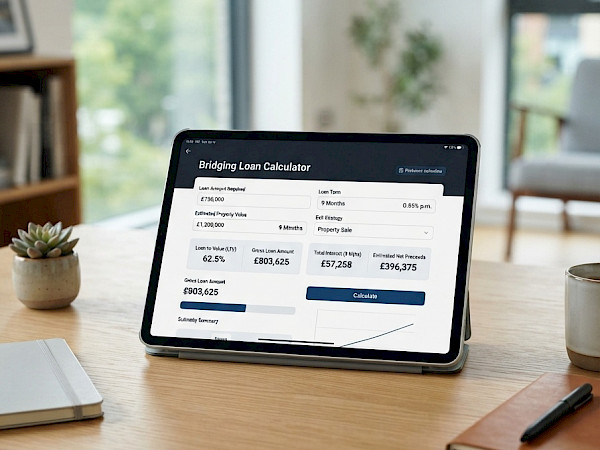
Our free bridging loan calculator shows you the full cost in seconds. Enter what you need to borrow, how long for and how you'd like to pay the interest, and you'll see exactly where your money goes.
Bridging Loan Calculator
How this is calculated
Loan-to-value (LTV): We divide your loan by your property value. Most bridging lenders cap loans at around 70% to 75% LTV, and lower LTVs usually get lower rates.
Monthly interest: We multiply your loan by the monthly rate. On a £300,000 loan at 0.8% a month, that's £2,400.
Rolled-up interest: Interest is added to the loan each month and repaid in one go at the end. You make no monthly payments.
Retained interest: The lender holds back the interest for an agreed period from the money it lends you. You receive less upfront but make no monthly payments.
Serviced interest: You pay the interest each month, like an interest-only mortgage. Only the loan and any exit fee are due at the end.
Fees: We add your arrangement and exit fees to the interest to show the total cost of borrowing.
How to use our bridging loan calculator
- Enter your loan and property value: if you're using more than one property as security, add their values together.
- Add a monthly rate: the average was 0.77% a month in Q3 2026, according to Bridging Trends. Try a range either side.
- Choose a realistic term: base it on when your sale, refinance or project should finish, then add a month or two.
- Pick an interest type: run all three to see which suits your cash flow.
- Add your fees: if you don't have a quote yet, use 2% for the arrangement fee and 0% to 1% for the exit fee.
What the calculator can tell you
- Your loan-to-value
- Your monthly interest, and whether you'll pay it now or later
- How much you'll actually receive if interest is retained
- The total cost of borrowing, including the lender's fees
- The amount you'll need to repay at the end
Calculations all done? Now get the advice you need...

Example calculations
These examples are illustrative only. Your rate and fees will depend on your property, your plans and the lender.
Example 1: One loan, three ways to pay the interest
A £300,000 loan secured on a £500,000 property (60% LTV) for nine months at 0.8% a month. The arrangement fee is 2%, the exit fee is 1%, and valuation and legal fees total £2,500.
Factor | Rolled-up | Retained | Serviced |
|---|---|---|---|
Monthly payments | None | None | £2,400 |
Money you receive | £300,000 | £278,400 | £300,000 |
Total interest | £21,600 | £21,600 | £21,600 |
Arrangement, exit, valuation and legal fees | £11,500 | £11,500 | £11,500 |
Total cost of borrowing | £33,100 | £33,100 | £33,100 |
Due at the end (loan, interest still owed and exit fee) | £324,600 | £303,000 | £303,000 |
The total cost is the same, but the timing isn't. Rolled-up suits you if you have no income to cover payments. Serviced suits you if you'd rather not have a large bill at the end. With retained interest, you'd need to borrow around £323,000 to end up with £300,000 in hand.
Some lenders compound rolled-up interest monthly. On this loan, that adds £704, taking total interest to £22,304.
Example 2: Breaking a property chain
Emma and Joe have found their next home but haven't sold their current one. They borrow £200,000 for six months at 0.75% a month, with interest rolled up.
Factor | Result |
|---|---|
Interest over six months | £9,000 |
Arrangement fee (2%) | £4,000 |
Valuation and legal fees | £2,500 |
Total cost | £15,500 |
Cost of each extra month if the sale is delayed | £1,500 |
Example 3: How the rate and term change your interest bill
Interest on a £250,000 loan, without compounding.
Monthly rate | 3 months | 6 months | 12 months |
|---|---|---|---|
0.55% | £4,125 | £8,250 | £16,500 |
0.65% | £4,875 | £9,750 | £19,500 |
0.75% | £5,625 | £11,250 | £22,500 |
0.85% | £6,375 | £12,750 | £25,500 |
1.00% | £7,500 | £15,000 | £30,000 |
1.25% | £9,375 | £18,750 | £37,500 |
A difference of 0.2% a month sounds small, but over 12 months on this loan it's £6,000.
How accurate is the calculator?
It gives you a reliable picture of interest and lender fees, but your actual cost will depend on:
- The rate you're offered, which reflects your LTV, property type and exit plan
- Whether the lender compounds rolled-up interest
- Whether fees are added to the loan, which means paying interest on them
- Broker, valuation and legal fees, which vary from case to case
- How long you actually keep the loan
Treat your results as a guide. An adviser can give you a full quote before you commit.
The full cost of a bridging loan
The calculator covers interest and the lender's main fees. Here's everything you might pay, so you can budget for the full amount.
Cost | Typical amount | In the calculator? |
|---|---|---|
Interest | Charged monthly, often 0.5% to 1.5% | Yes |
Arrangement fee | Around 2% of the loan | Yes |
Exit fee | Often none, sometimes around 1% | Yes |
Valuation fee | Depends on the property's value and type | No |
Legal fees | Yours and usually the lender's too | No |
Broker fee | Varies; ask for it in writing upfront | No |
Admin or funds transfer fees | Usually small, often under £100 | No |
Why the loan term matters most
Because interest is charged by the month, the length of your loan has a bigger effect on cost than almost anything else. In Example 2, every month of delay adds £1,500.
When you enter a term, base it on a realistic exit, such as a sale agreed, a mortgage offer or a finished refurbishment. Then run the calculator again with two or three extra months to see what a delay would cost. Many loans can be repaid early without a penalty, so a longer term is often a safer starting point.
"When time is of the essence in property transactions, a bridging loan acts as a vital financial lifeline. However, because interest is typically rolled up and rates can vary depending on your exit strategy, accurately calculating your total costs upfront is essential. Using a reliable bridging loan calculator allows you to clearly project your repayments and safeguard your investment returns before speaking to an expert."
Chris Duckworth Tips to reduce the cost of your bridging loan
- Lower your LTV: offering more equity or extra security can bring the rate down.
- Have a clear exit plan: lenders price in risk, and a solid exit can earn a better rate.
- Compare total cost, not the headline rate: a lower rate with high fees can cost more on a short loan.
- Check for compounding: ask whether rolled-up interest is simple or compounded.
- Avoid adding fees to the loan where possible: otherwise you'll pay interest on them.
- Check for minimum interest periods: some lenders charge at least one to three months' interest even if you repay sooner.
Why choose Echo Finance?
- Whole-of-market access to specialist bridging lenders, including some that only work through brokers
- Help with chain breaks, auction purchases, refurbishments and business needs
- Clear, upfront quotes showing every fee
- Free initial consultation with no obligation
Ready to get a full quote? Get started here for a free, no-obligation chat with one of our advisers.
FAQs
No. The calculator doesn't run a credit check or store your details, so you can use it as often as you like.
Find your local adviser

- Residential mortgages: Everything from fixed-rate to tracker mortgages for first-time buyers, homemovers and remortgage borrowers
- Specialist mortgages: For borrowers who fall outside of standard lending criteria, including people with bad credit, self-employed professionals and more
- Later-life lending: Including advice on equity release, mortgages for pensioners and retirement interest only (RIO) mortgages
- Bridging & Commercial: We have specialist advisors on hand for commercial mortgages, bridging loans, development finance and more
- Insurance & Protection: Including life, home and critical illness cover for families and individuals, as well as landlord and business protection insurance
Echo Finance is regulated by the Financial Conduct Authority and is reviewed annually by an independent compliance company. All of our brokers and advisers hold industry-standard qualifications, such as CeMAP, CeRER and DipMap, where required.
We are committed to providing advice through the channels that best suit your needs. Our brokers can provide advice via phone, email, video and web chat from anywhere in the UK, but we also aim to offer face-to-face appointments for those who request them.