




Content Writer
Director
With high mortgage interest rates and elevated living costs dominating the conversation with many of your clients, many brokers are, unsurprisingly, met with immediate resistance from clients when they introduce protection products into the conversation.
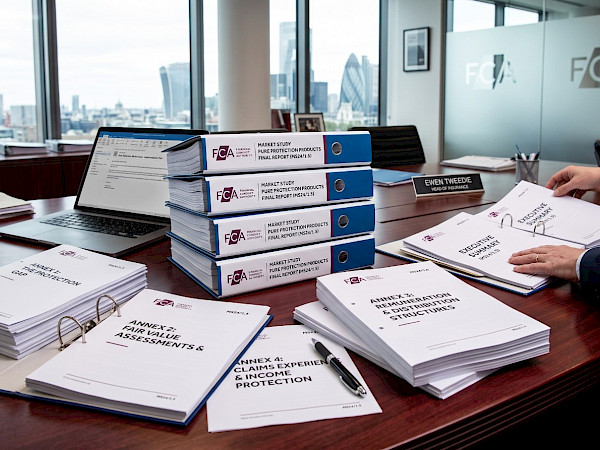
However, the FCA’s latest market study on the distribution of pure protection products highlighted a massive protection gap among homeowners across the UK. We’ll look at how to reframe protection product discussions in the current economic climate, to help you make the best of this huge missed opportunity.
What did the FCA Pure Protection Market Study find?
A major takeaway from the FCA’s report is that while the market generally delivers good outcomes, wide product availability, and high claims acceptance for those who already hold pure protection, the majority of the UK remains highly vulnerable.
For example, it highlighted that:
58% of people do not hold any protection products at all
59% of those without cover have never even considered their protection needs
The regulator explicitly noted concerns that this gap is driven by limited consumer awareness and challenges in the sales process making access difficult.
While this perspective perhaps overlooks a more obvious reason for low uptake of protection products; affordability, it also presents brokers with both a consumer duty obligation, and a major business opportunity.
How to reframe it
Clients aren't necessarily rejecting protection products, such as life insurance, critical illness cover and income protection, because they don't value it. However, there are many objections to overcome when it comes to upselling products to mortgage clients.
The most typical, rather than a lack of awareness or understanding, tends to be expense.
Overcoming the additional expense argument
To advise clients effectively in a high-cost environment, brokers must pivot the conversation away from viewing protection as a "luxury add-on" and reframe it as an essential component of mortgage affordability
Here is how you can approach the conversation to overcome the immediate cost objection:
Plant the seed early, not as an afterthought
If you wait until the mortgage is offered to bring up life insurance or income protection, it will inevitably feel like an extra, unexpected bill. Integrate the protection conversation into your initial fact-find. When discussing their income, outgoings, and how much they can borrowShift from cost to financial resilience
Clients often push back against additional monthly premiums. Brokers can reframe this by comparing the cost of the premium against the potential financial devastation of losing their home. In an era of high living costs, households actually have less of a buffer in their savings to rely on if they fall ill or lose their income. Protection is a safety net for their biggest financial commitmentTailor the policy to the budget (Some cover is better than none)
Clients often assume protection is an all-or-nothing prospect. If a comprehensive critical illness and income protection package is too expensive, strip it back. Discuss extending deferred periods for income protection (if they receive sick pay from work for example) or providing decreasing term cover just to protect the mortgage balance
How this works in practice
When navigating pushback from clients, adjusting your framing can make all the difference. Here is how you can pivot common cost-of-living objections into constructive conversations:
The Client's Objection | The Broker's Reframe |
"My mortgage rate is already so high, I can't afford any extra outgoings right now." | "Because living costs are high, your savings buffer is likely smaller. If you lost your income tomorrow, how long could you sustain this higher mortgage payment without a safety net?" |
"I get sick pay through my employer, so I don't need income protection." | "That's great. We can actually factor your employer's sick pay into the policy by extending the deferred period to kick in exactly when your work sick pay stops. This can make the premium significantly cheaper." |
"I'll think about it later once we've settled in and know our new bills." | "The FCA recently found that 59% of people never get around to considering their protection needs. Let's put a basic, budget-friendly safety net in place now, and we can review and expand it next year." |
Preparing for a more holistic advisory landscape
Under the FCA's Consumer Duty, ensuring clients avoid foreseeable financial harm is paramount. Leaving a client with a massive mortgage liability and no safety net leaves them inherently vulnerable to economic shocks.
By addressing the findings of the FCA’s report, brokers can take the lead in closing the UK's protection gap. Advisers who master the art of contextualising pure protection within the broader affordability conversation today will hold a distinct advantage in building long-term, high-value client relationships while ensuring their clients are genuinely protected.